





Joe Henderson (April 24, 1937 – June 30, 2001) was an American jazz musician and composer best known as a tenor saxophonist. He was born in Lima, Ohio and studied music at Kentucky State College and Wayne State University. His career as a musician began in Detroit. Joe Henderson grew up in a large family with five sisters and nine brothers. His parents and his older brother James encouraged him to study music. His earliest musical interests were drums, piano, saxophone and composition. He was particularly fond of his brother's record collection. He was introduced to Lester Young, Flip Phillips, Stan Getz, Lee Konitz, Charlie Parker and Jazz at the Philharmonic recordings. At the age of eighteen, in the mid-fifties, he was part of the Detroit jazz scene. He taught himself to play the double bass and flute and continued to develop his skills as a saxophone player and composer. At Wayne State University, he amazed his music teachers with his wind technique and perfect tone control. The hundreds of hours of listening and replaying Lester Young solos had paid off. No doubt his classmates Yusef Lateef, Barry Harris and Donald Byrd will have given him additional inspiration. After two years of military service (1960-1962), he met trumpeter Kenny Dorham on arrival in New York, who helped him further on his musical career. Although a strong hard-bop influence can be heard in his earliest recordings, as can be heard on Pete la Roca's 1965 album Basra, his playing included other styles such as R&B, Latin and avant-garde in addition to bebop. Soon he got the chance to play with Horace Silver's orchestra. The influential solo on the hit Song for My Father is his. He left Horace Silver in 1966 and became a freelance musician. He also briefly led an orchestra together with Kenny Dorham. No recordings were made of his arrangements from that period until Joe Henderson Big Band (Verve) was released in 1996. His association with Blue Note became a very fruitful collaboration: no less than 30 albums were released between 1963 and 1968. The recordings were very diverse: from hard-bop sessions to avant-garde experiments. He left his mark on important albums: on the song Song for My Father with Horace Silver, on the Prisoner, the dark album by Herbie Hancock, and on Andrew Hill's avant-garde albums Black Fire and Point of Departure. In 1967 we find him alongside Miles Davis in his famous quintet with Herbie Hancock, Wayne Shorter, Ron Carter and Tony Williams. Recordings of it have not been preserved, but Joe Henderson reportedly stole the show many times. Years later, Henderson's adaptability and eclecticism would come to the fore even more. In 1967, Joe Henderson signed for the young record company Milestone Records. This marked the start of a new phase in his career.ogether with Freddie Hubbard, he led the Jazz Communicators from 1967 to 1968. Henderson also performed in Hancock's Fat Albert Rotunda. At that time, Joe also began experimenting with more and more avant-garde structures, jazz-funk fusion, studio overdubbing, and other electronic effects. Song and album titles such as Power To the People, In Pursuit of Blackness, and Black Narcissus reflected his growing political awareness and social engagement, even though the latter album was named after Michael Powell and Emeric Pressburger's 1947 film Black Narcissus. After a brief collaboration with Blood, Sweat & Tears in 1971, Henderson moved to San Francisco and began teaching there. He still performed and also made recordings, but did not receive much appreciation from the jazz audience at the time. Occasionally he also worked with Echoes of an Era, the Griffith Park Band and Chick Corea, but mostly in the eighties he was an orchestra leader and composer himself. As a talented and prolific composer, he began to focus more on new interpretations of jazz standards and his own earlier works. Blue Note tried to bring him to the forefront of the jazz scene in 1986 with the double album State of the Tenor. Joe Henderson had to wait a long time for recognition, but during his last years he still had the pleasure of being a star. He died on June 30, 2001 from the effects of a lung disease.
Welcome to the official North Sea Jazz Archive! On our channel you will find live performances and interviews of Jazz Legends like Lionel Hampton, Ray Charles, Maceo Parker, Herbie Hancock and many more, who have performed at the legendary North Sea Jazz Festival in the Netherlands.
Watch more videos ???? https://bit.ly/MoreNSJArchive
Subscribe now ???? https://bit.ly/SubscribeNSJArchive
Website ???? https://www.northseajazz.com
Thanks for all your support. Rating the video and leaving a comment is always appreciated!
Please: respect each other in the comments.
This is the official YouTube channel of North Sea Jazz Archive
Welcome to the official North Sea Jazz Archive! On our channel you will find live performances and interviews of Jazz Legends like Lionel Hampton, Ray Charles, Maceo Parker, Herbie Hancock and many more, who have performed at the legendary North Sea Jazz Festival in the Netherlands.
Watch more videos ???? https://bit.ly/MoreNSJArchive
Subscribe now ???? https://bit.ly/SubscribeNSJArchive
Website ???? https://www.northseajazz.com
Thanks for all your support. Rating the video and leaving a comment is always appreciated!
Please: respect each other in the comments.
This is the official YouTube channel of North Sea Jazz Archive
- Category
- Live Concert
- Tags
- North Sea Jazz, NSJ, Festival
Post your comment
Up Next
Autoplay
-
1:22:07
![George Benson - Full Concert [HD] | Live at North Sea Jazz Festival 2009](https://showbizmusic.com/templates/echo/img/echo-lzld.png)
George Benson - Full Concert [HD] | Live at North Sea Jazz Festival 2009
-
27:10
Al Di Meola - Live in Concert [HD] | Live at North Sea Jazz Festival 1993
-
1:18:01
MD2S | Snoop Dogg | Full Concert | Live at North Sea Jazz Festival |
-
1:24:59
Olodum - Full Concert [HD] | Live at North Sea Jazz Festival 1994
-
1:23:18
La India - Full Concert [HD] | Live at North Sea Jazz Festival 2001
-
54:45
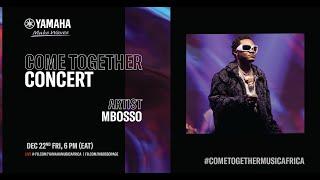
YAMAHA COME TOGETHER CONCERT SERIES | 11TH EDITION | MBOSSO
-
37:49

Rachmaninoff: Piano Concerto no.2 op.18 - Anna Fedorova - Complete Live Concert - HD
-
24:43
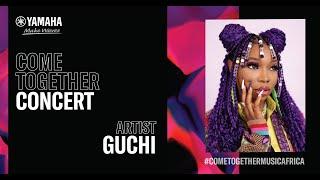
Yamaha Come Together Concert -10th Edition
-
21:28
BTS 2021 Concert ქართულად(ნაწილი 1)
-
3:01:10
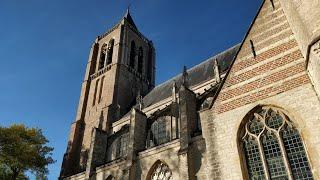
Benefietconcert voor Oekraïne - Grote kerk Tholen
Comments